Рисунок 14
Figure 14
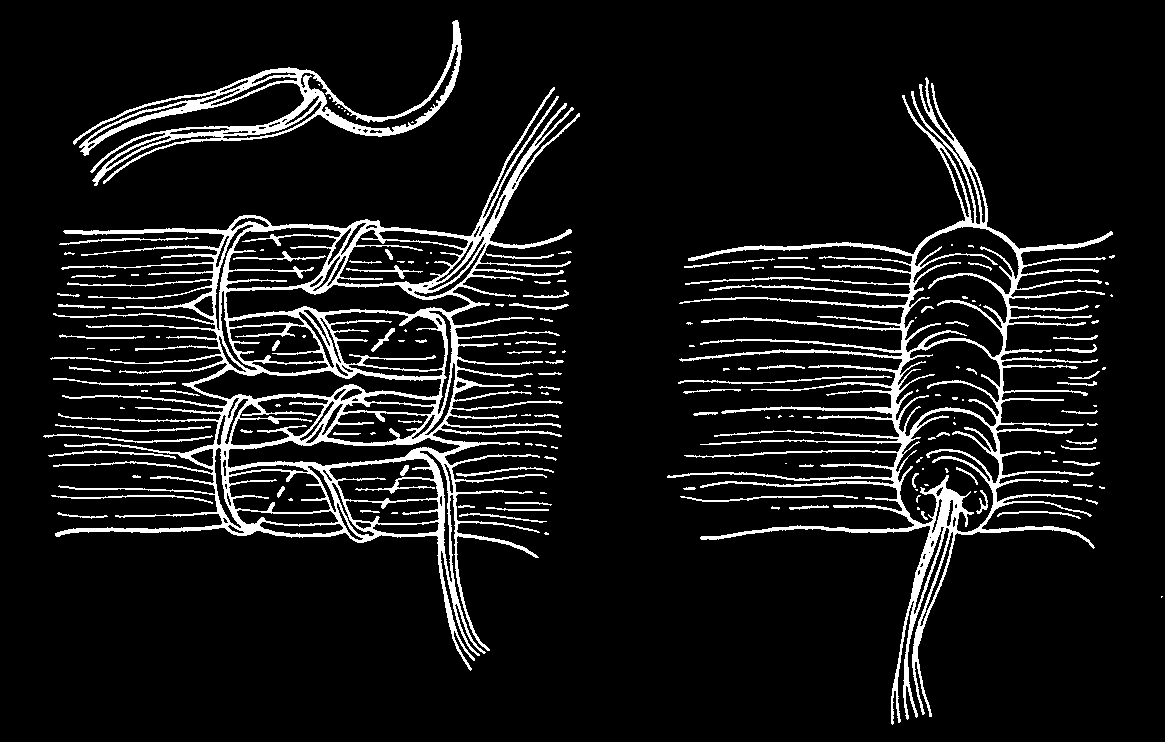
Изобретательная техника, затягивание О'Коннора (O’Connor cinch), обеспечивала минимальное укорочение прямой мышцы. Большая тупая игла использовалась для продевания многониточного шва через лоскуты сухожилия или мышцы. Чем больше количество нитей, создающих более объемный шов и больший диаметр нити, тем большее укорочение мышцы достигается.
An ingenious technique, the O’Connor cinch, produced minimal shortening of a rectus muscle. A large, dull needle was used to weave a multiple-strand suture through slips of the tendon or muscle. The greater the number of threads, producing a bulkier suture and a greater diameter of thread, the more shortening of the muscle is produced.
A
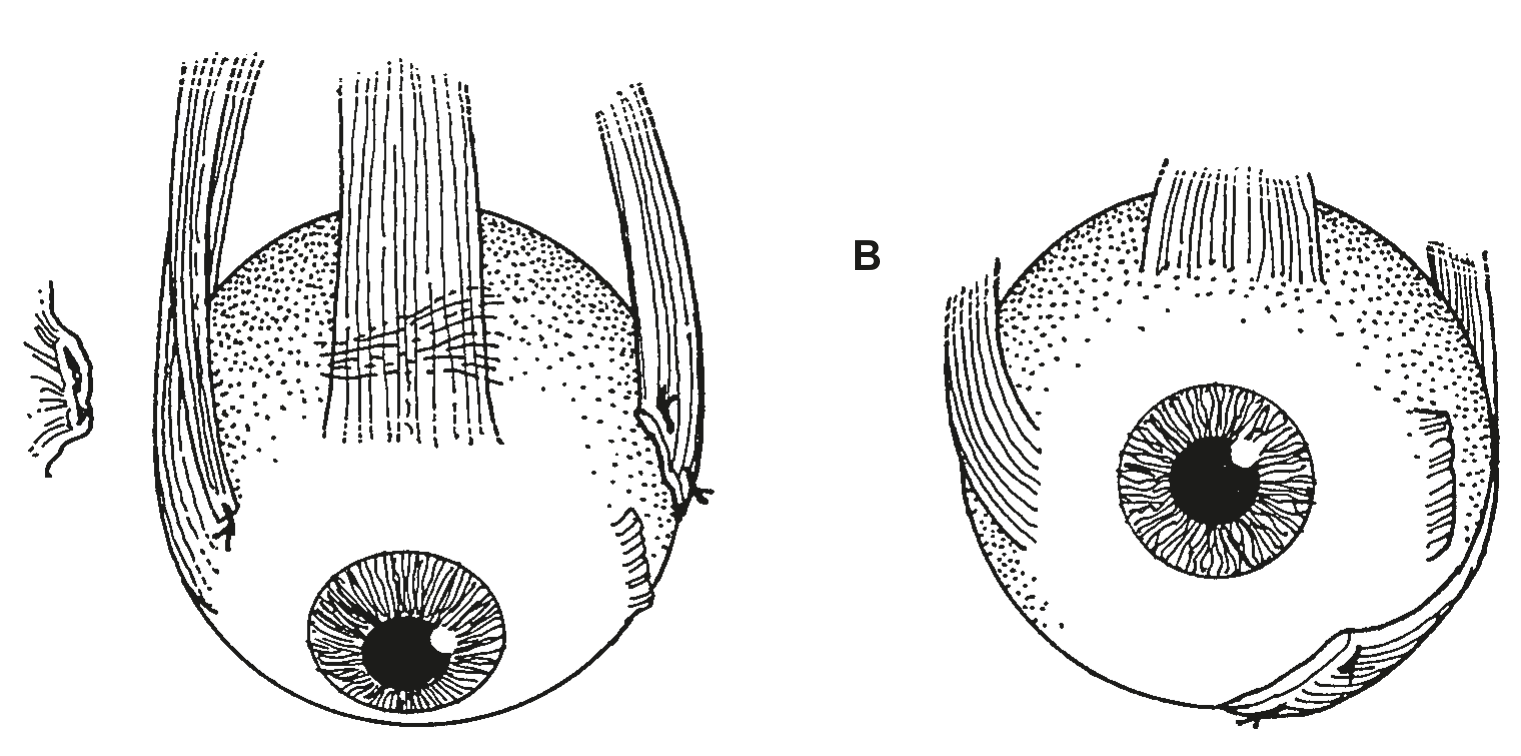
Рисунок 15
Figure 15
B
A Питер предположил фрактурировать трохлеа, а затем сместить и прикрепить верхнюю косую мышцу к точке рядом с местом прикрепления внутренней прямой мышцы. Эта процедура сочеталась с тенотомией или рецессией наружной прямой мышцы для лечения паралича третьего черепного нерва.
A Peter suggested fracturing the trochlea and then shifting and attaching the superior oblique muscle to a point near the medial rectus insertion. This procedure was combined with lateral rectus tenotomy or recession for treatment of third cranial nerve palsy.
B Наружная прямая мышца была смещена для лечения врожденного отсутствия нижней прямой мышцы.
B The lateral rectus was shifted for treatment of congenital absence of the inferior rectus.
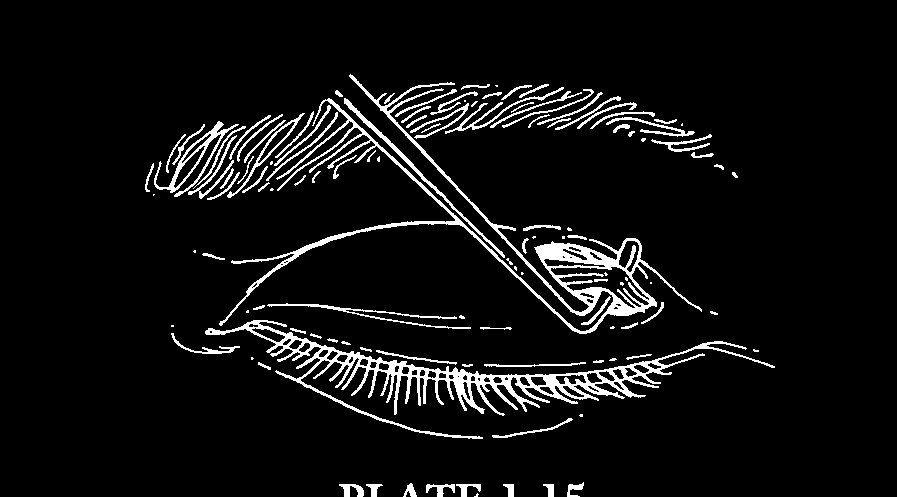
Рисунок 16
Figure 16
Транскутанный доступ к сухожилию верхней косой мышцы обеспечивал доступ для тенотомии или подшивания. Кожные разрезы часто использовались для обнажения как верхней, так и нижней косых мышц в начале двадцатого века.
A transcutaneous approach to the superior oblique tendon afforded exposure for tenectomy or tucking. Skin incisions were commonly used for exposure of both superior and inferior oblique muscles in the early twentieth century.
A1
A2
B
C
D
E
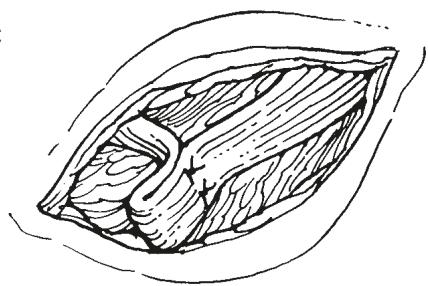
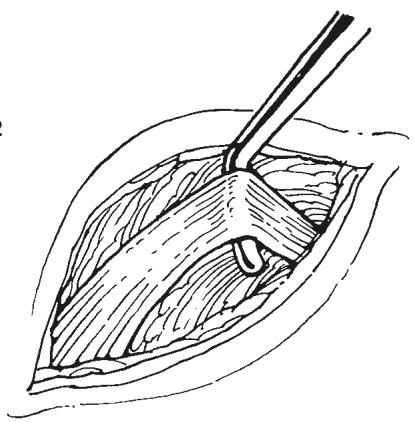
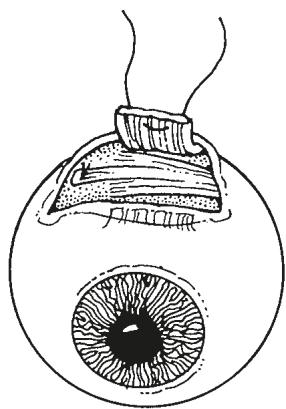
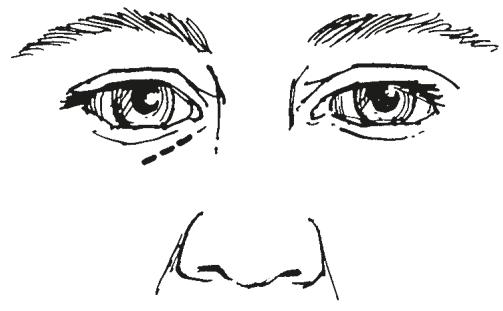
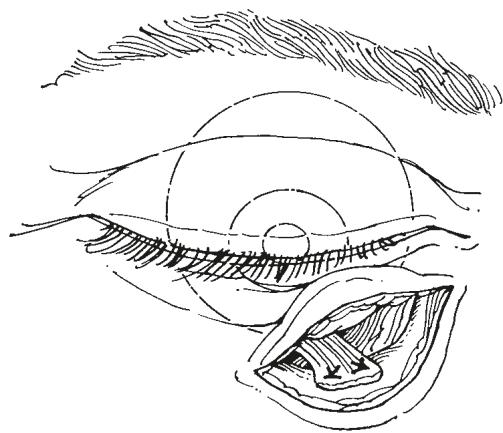
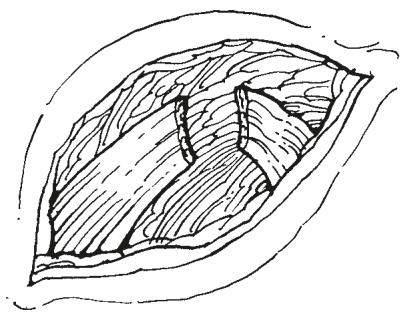
Рисунок 17
Figure 17
A1 Wheeler обнажил нижнюю косую мышцу медиально по отношению к нижней прямой мышце через кожный разрез.
A1 Wheeler exposed the inferior oblique muscle nasal to the inferior rectus through a skin incision.
A2 Затем нижняя косая мышца была захвачена мышечным крючком.
A2 The inferior oblique muscle was then engaged with a muscle hook.
B После этого обнажения мышцу можно было ослабить путем миотомии.
B From that exposure the muscle could be weakened by myotomy.
C Мышцу также можно было укоротить путем подшивания.
C The muscle also could be shortened by a tuck.
D Необычная процедура «укрепления» нижней косой мышцы, выполненная Уиллером, заключалась в откреплении мышцы с последующим повторным прикреплением отсеченного конца к надкостнице края нижней глазницы.
D A curious inferior oblique ‘strengthening’ procedure performed by Wheeler was disinsertion of the muscle followed by reinsertion of the cut end into the inferior orbital rim periosteum.
E Уиллер укреплял верхнюю косую мышцу путем продвижения центральной части сухожилия вперед. Он признавал, что эта процедура приводит к уменьшению элевации при аддукции. Кроме того, он признавал, что смещение сухожилия кпереди вызывает инторсию, а задние волокна влияют на депрессию глазного яблока — концепция, которую позже приписывали Harada и Ito (Jpn J Ophthalmol 8:88, 1964).
E Wheeler strengthened the superior oblique muscle by advancing the central portion of the tendon. He recognized that this procedure produced decreased elevation in adduction. In addition, he recognized that shifting the tendon anteriorly produced intorsion and that posterior fibers influenced depression of the globe, a concept later credited to Harada and Ito (Jpn J Ophthalmol 8:88, 1964).