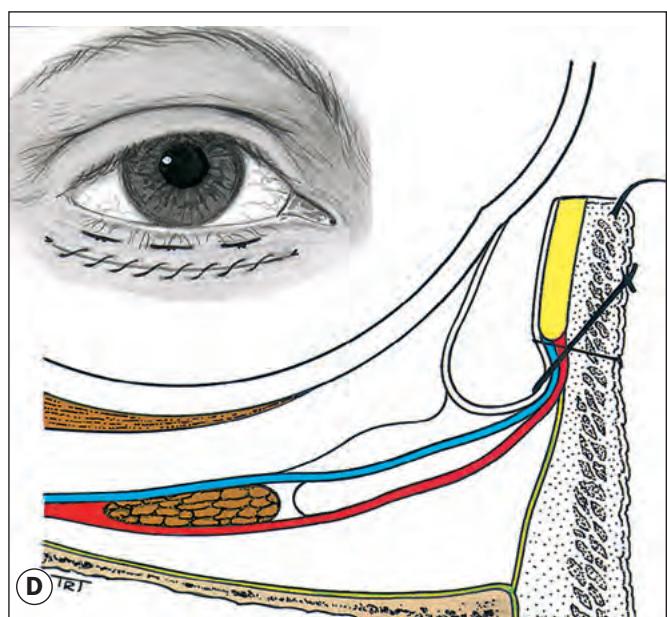
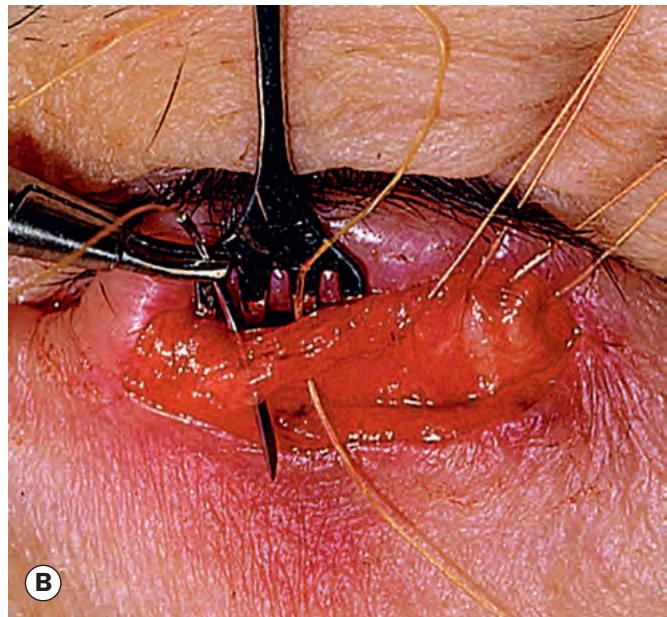
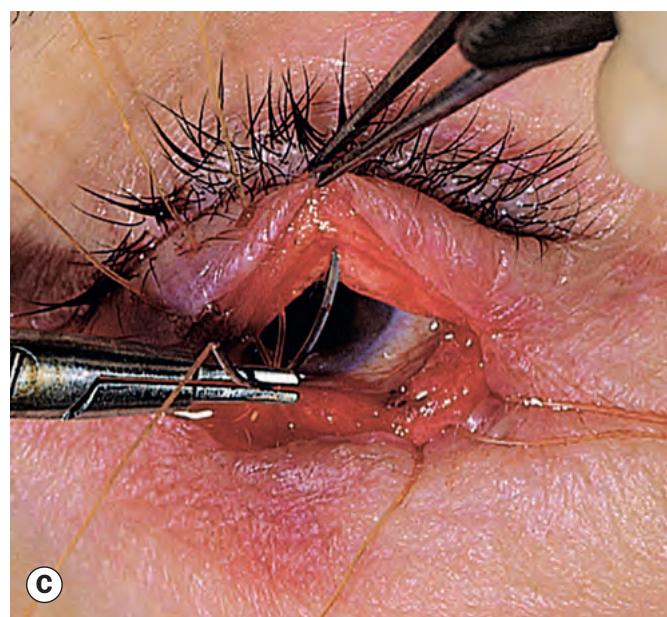
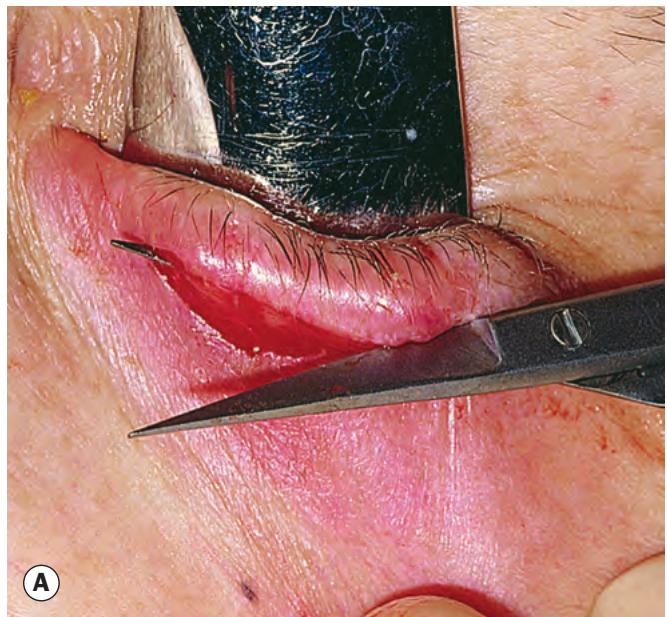
Fig. 1.69 Wies procedure for entropion. (A) Full-thickness incision; (B) sutures are passed through the conjunctiva and lower lid retractors; (C) sutures are passed anterior to the tarsal plate to exit inferior to the lashes; (D) schematic
(Courtesy of AG Tyers and JRO Collin, from Colour Atlas of Ophthalmic Plastic Surgery, Butterworth-Heinemann 2001 – figs A–C)
Dermatochalasis
This is described in the discussion of pseudoptosis (above) and upper lid blepharoplasty (below).
Floppy eyelid syndrome
Introduction
Floppy eyelid syndrome (FES) is an uncommon unilateral or bilateral condition that is often overlooked as a cause of persistent ocular surface symptoms. It typically affects obese middle-aged and older men who sleep with one or both eyelids against the pillow, leading to pulling of the lid away from the globe; consequent nocturnal exposure and poor contact with the globe, often exacerbated by other ocular surface disease such as dry eye and blepharitis, result in chronic keratoconjunctivitis. Obstructive sleep apnoea (OSA) is strongly associated; OSA is linked to significant morbidity, including cardiopulmonary disease and subtle but irreversible mental dysfunction.

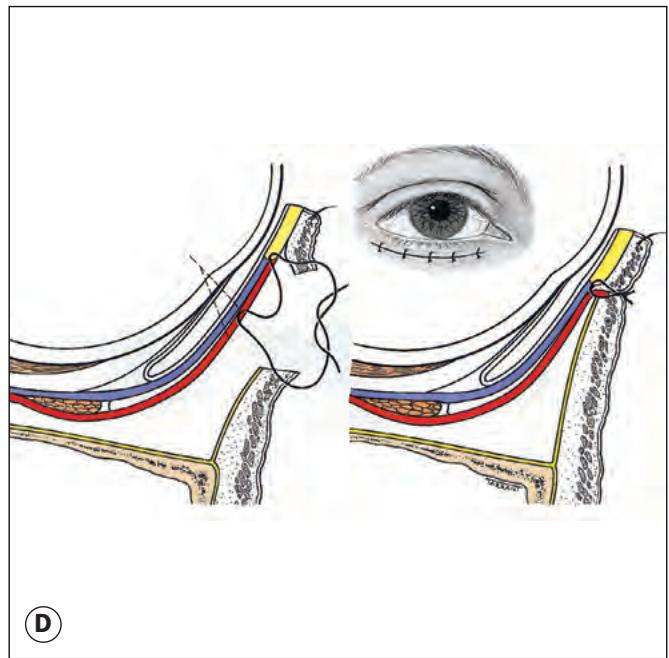

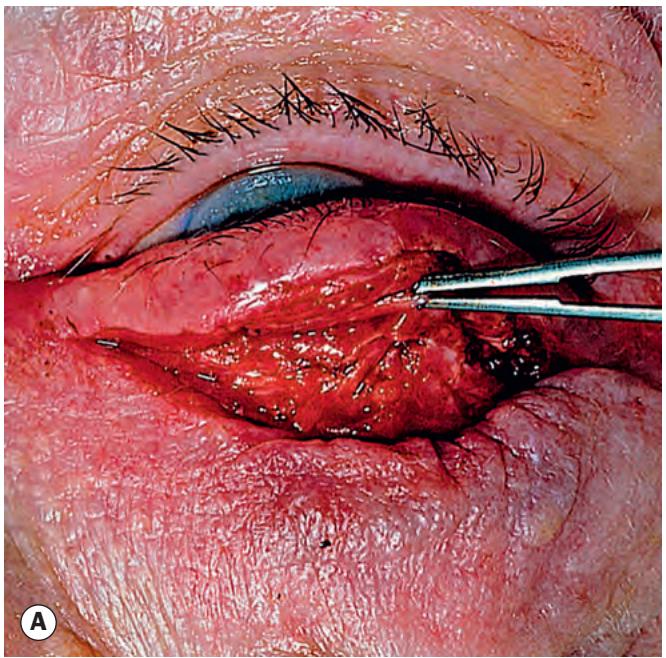
Fig. 1.70 Lower retractor reinsertion. (A) Incision to expose the lower border of the tarsal plate; (B) reflection of the orbital septum and fat pad to expose the lower lid retractors; (C) tightening of retractors by plication; (D) schematic (Courtesy of AG Tyers and JRO Collin, from Colour Atlas of Ophthalmic Plastic Surgery, Butterworth-Heinemann 2001)