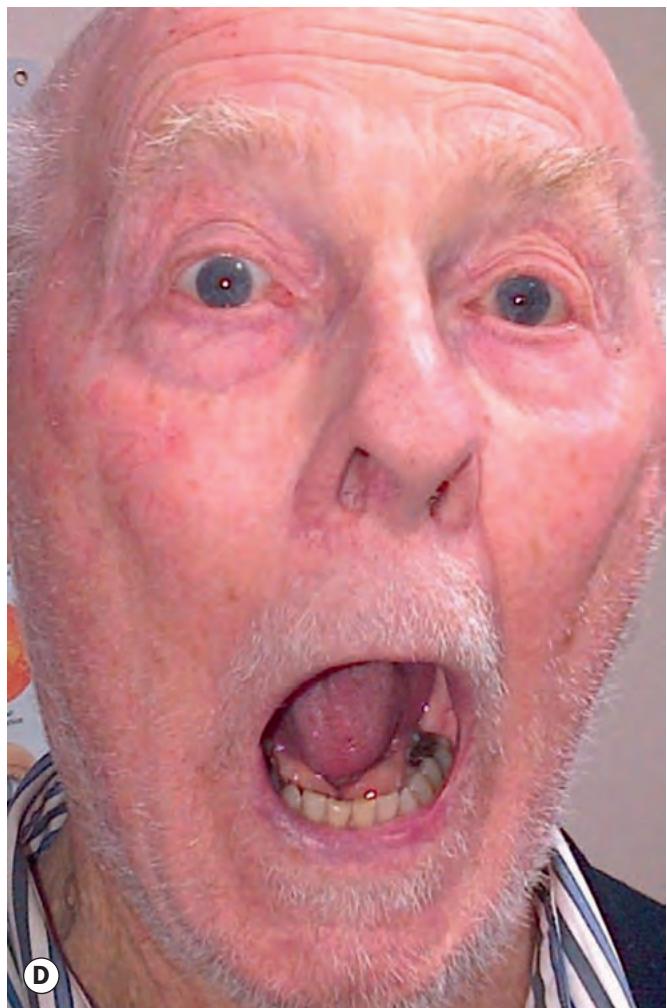
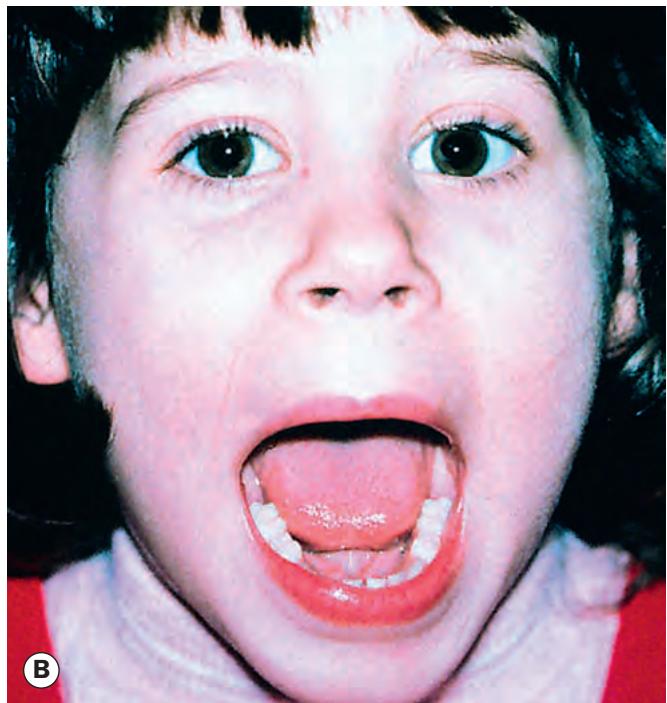
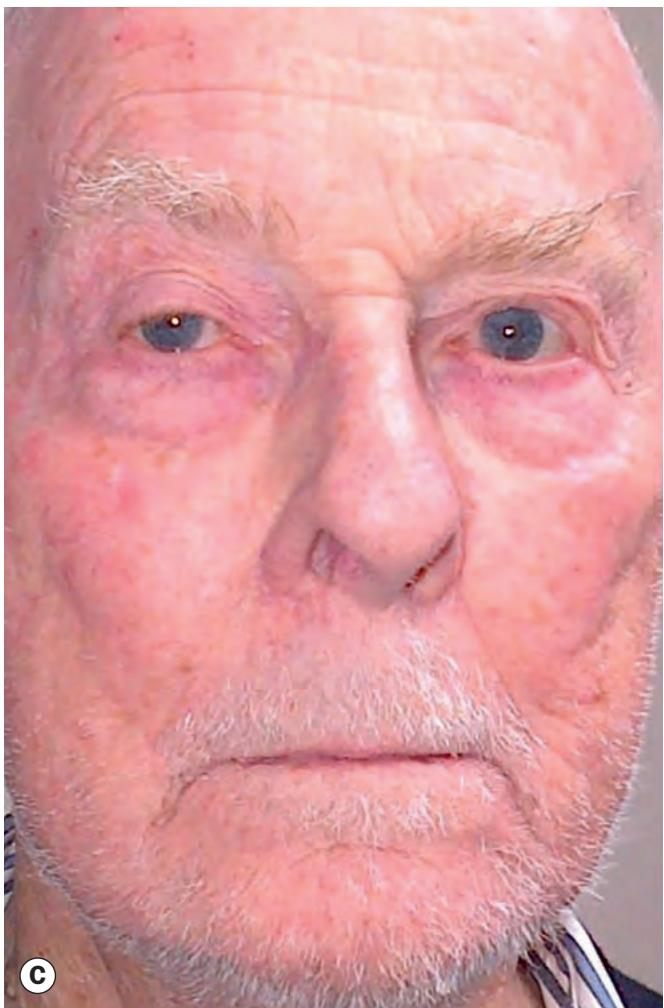
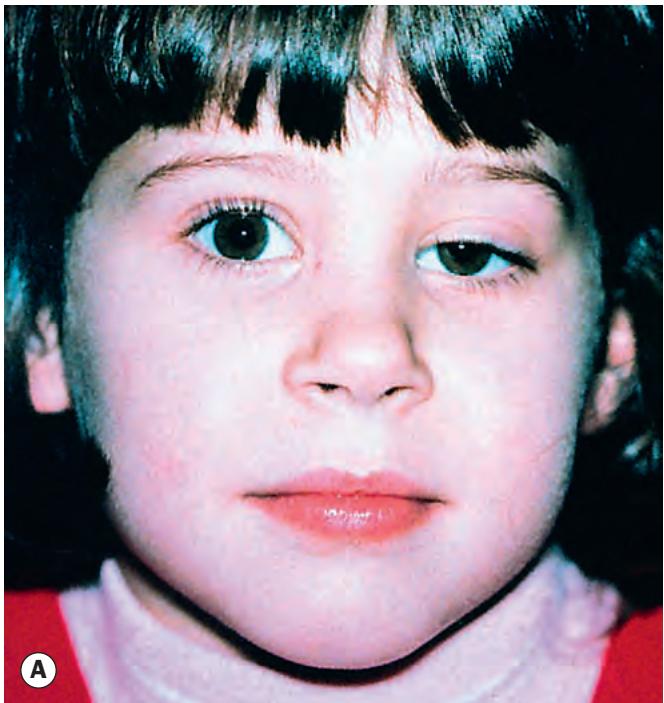
Fig. 1.53 Marcus Gunn jaw-winking syndrome. (A) Moderate left ptosis; (B) retraction of the lid on opening the mouth; (C) and (D) similar phenomenon in an older patient
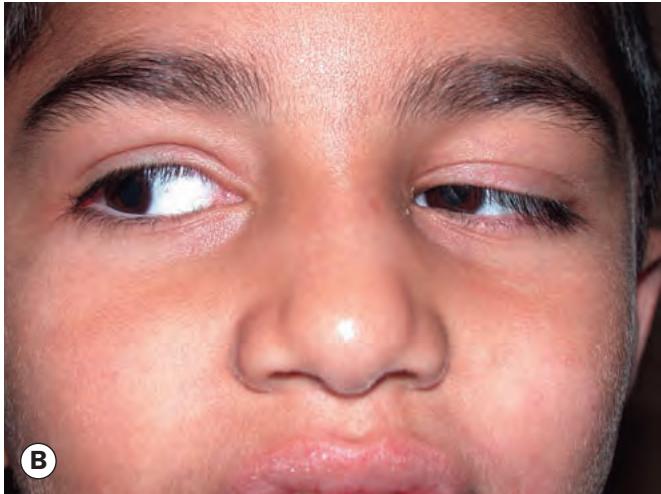
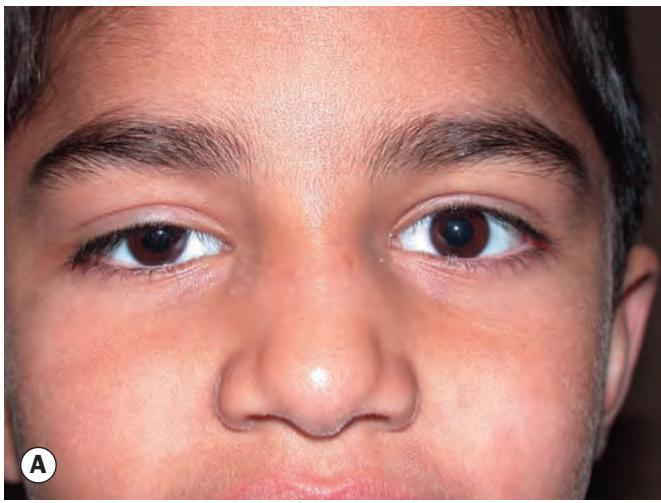
Fig. 1.54 Third nerve redirection. (A) Moderate right ptosis; (B) retraction of the lid on right gaze (Courtesy of A Pearson)
Involutional ptosis
Involutional (aponeurotic) ptosis is an age-related condition caused by dehiscence, disinsertion or stretching of the levator aponeurosis, limiting the transmission of force from a normal levator muscle to the upper lid. Due to fatigue of the Müller muscle it frequently worsens towards the end of the day, so that it can sometimes be confused with myasthenic ptosis. There is a variable, usually bilateral, ptosis with a high upper lid crease and good levator function. In severe cases the upper lid crease may be absent, the eyelid above the tarsal plate very thin and the upper sulcus deep (Fig. 1.55). Treatment options include levator resection, advancement with reinsertion or anterior levator repair.
Mechanical ptosis
Mechanical ptosis is the result of impaired mobility of the upper lid. It may be caused by dermatochalasis, large tumours such as neurofibromas (Fig. 1.56), heavy scar tissue, severe oedema and anterior orbital lesions.

Fig. 1.55 Severe bilateral involutional ptosis with absent skin creases and deep sulci
Surgery
Anatomy
The levator aponeurosis fuses with the orbital septum about 4 mm above the superior border of the tarsal plate (Fig. 1.57). Its posterior fibres insert into the lower third of the anterior surface of the tarsal plate. The medial and lateral horns are expansions that act as check ligaments. Surgically, the aponeurosis can be approached through the skin or conjunctiva.
Müller muscle is inserted into the upper border of the tarsal plate and can be approached transconjunctivally.
The inferior tarsal aponeurosis consists of the capsulopalpebral expansion of the inferior rectus muscle and is analogous to the levator aponeurosis.
The inferior tarsal muscle is analogous to Müller muscle.