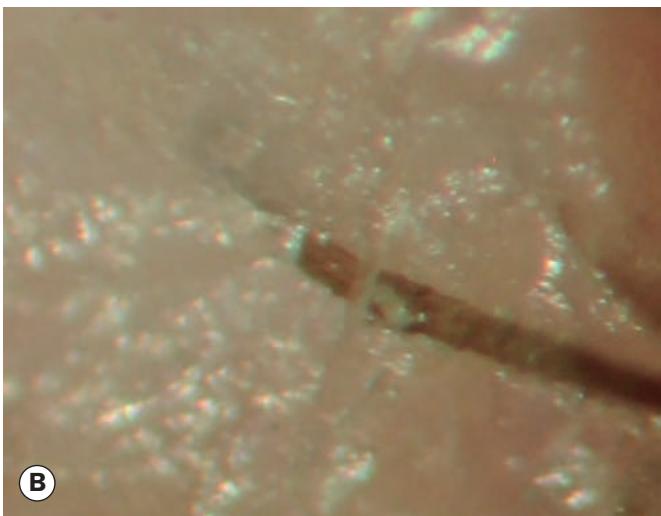
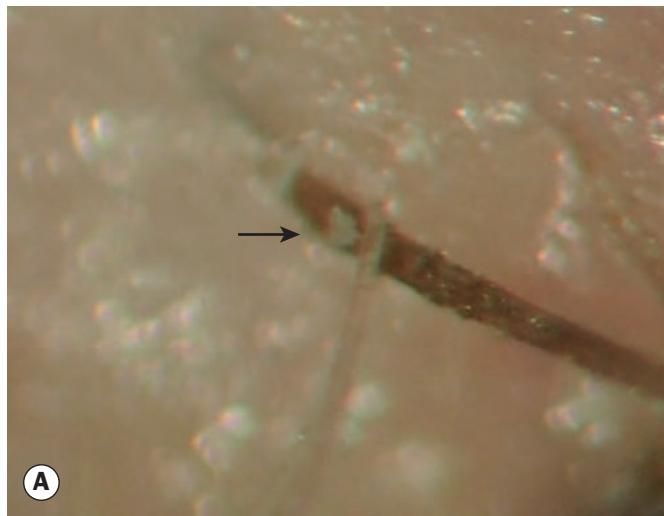
Fig. 1.44 Demodex mite. (A) Mite visible at eyelash base as a whitish lesion (arrow) after lash manipulation following clearance of collarette; (B) photograph taken two seconds later showing rapid migration
○ When substantial meibomian gland disease is present, the regimen may include expression of accumulated meibum by rolling the finger anteriorly over the margin.
☐ The putative action of lid hygiene against Demodex is via prevention of reproduction.
○ Lid hygiene can be performed less frequently as the condition is brought under control.
• Antibiotics
○ Topical sodium fusidic acid, erythromycin, bacitracin, azithromycin or chloramphenicol is used to treat active folliculitis in anterior disease and is occasionally used for an extended period. Following lid hygiene the ointment should be rubbed onto the anterior lid margin with a cotton bud or clean finger.
○ Oral antibiotic regimens include doxycycline (50–100 mg twice daily for 1 week and then daily for 6–24 weeks), other tetracyclines, or azithromycin (500 mg daily for 3 days for three cycles at 1-week intervals); antibiotics are thought to reduce bacterial colonization and may also exert other effects such as a reduction in staphylococcal lipase production with tetracyclines. Tetracyclines may be more effective in the treatment of posterior disease, and azithromycin in anterior. Tetracyclines should not be used in children under the age of 12 years or in pregnant or breast-feeding women because they are deposited in growing bone and teeth; patients should also be aware of the possibility of increased sun sensitivity. Erythromycin 250 mg once or twice daily is an alternative.
Plant and fish oil supplements have been shown to be of substantial benefit in some cases.
Topical steroid. A low potency preparation such as fluorometholone 0.1% or loteprednol four times daily for 1 week is useful in patients with substantial active inflammation, especially papillary conjunctivitis; occasionally a higher strength preparation is used.
Tear substitutes and other dry eye treatments are typically helpful for associated tear insufficiency and instability.
Tea tree oil has been suggested as a treatment, based primarily on its likely activity against Demodex infestation; the optimal vehicle and regimen has not been established but lid, eyebrow and periocular skin cleansing once daily with a 50% scrub and application of 5% ointment has been described. Topical permethrin and topical (1% cream) or oral (two doses of 200 µg/kg 1 week apart) ivermectin have also been used by some practitioners. High temperature cleaning of bedding, the use of tea tree shampoo and facial soap, and treating the patient’s partner may all help to reduce recurrences.
Novel therapies include topical ciclosporin, pulsed light application, and purpose-designed devices to probe, heat and/or express the meibomian glands (e.g. Lipiflow ™) in posterior disease.
Complications are treated specifically.
Phthiriasis palpebrarum
The crab louse Phthirus pubis is adapted to living in pubic hair, but is also commonly found in other hair-covered body areas such as the chest, axillae and eyelids (phthiriasis palpebrarum). Symptoms consist of chronic irritation and itching of the lids, but the lice are often an incidental discovery. Conjunctivitis is uncommon. The lice are readily visible anchored to lashes (Fig. 1.45A); lice have six legs rather than the eight possessed by ticks (see next). Ova and their empty shells appear as oval, brownish, opalescent pearls adherent to the base of the cilia (Fig. 1.45B). Treatment consists of mechanical removal of the lice and their attached lashes with fine forceps. If necessary, topical yellow mercuric oxide 1% or petroleum jelly can be applied to the lashes and lids twice a day for 10 days. Delousing of the patient, family members, clothing and bedding is important to prevent recurrence.


Fig. 1.45 Phthiriasis palpebrarum. (A) Louse anchored to lashes; (B) louse, ova and shells
(Courtesy of D Smit – fig. B)