Atopic dermatitis
Atopic dermatitis (eczema) is a very common idiopathic condition, typically occurring in patients who also suffer from asthma and hay fever. Eyelid involvement is relatively infrequent but when present is invariably associated with generalized dermatitis. Thickening, crusting and fissuring of the lids (Fig. 1.37C) is typical, and staphylococcal blepharitis, vernal or atopic keratoconjunctivitis are also commonly present. Herpetic blepharitis and keratoconjunctivitis is more common and more severe in patients with atopy (eczema herpeticum). Treatment of the lid features is with emollients to hydrate the skin and the judicious use of mild topical steroid such as hydrocortisone 1%. Uncommon ocular associations include keratoconus, cataract and retinal detachment (see also Ch. 5).
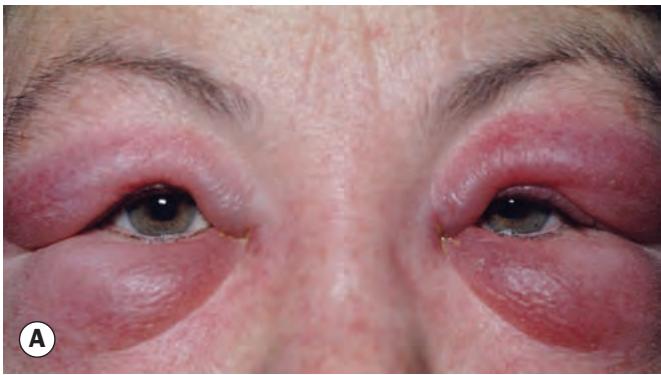

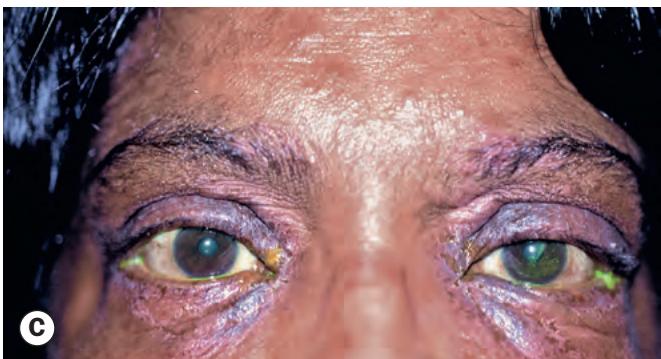
Fig. 1.37 Allergic disorders. (A) Acute allergic oedema; (B) contact dermatitis; (C) atopic dermatitis
BACTERIAL INFECTIONS
External hordeolum
An external hordeolum (stye) is an acute staphylococcal abscess of a lash follicle and its associated gland of Zeis that is common in children and young adults. A stye presents as a tender swelling in the lid margin pointing anteriorly through the skin, usually with a lash at its apex (Fig. 1.38A). Multiple lesions may be present and occasionally abscesses may involve the entire lid margin. Treatment involves topical (occasionally oral) antibiotics, hot compresses and epilation of the associated lash.
Impetigo
Impetigo is an superficial skin infection caused by Staphylococcus aureus or Streptococcus pyogenes; it typically affects children. Involvement of the eyelids is usually associated with infection of the face. Painful erythematous macules rapidly develop into thin-walled blisters, which develop golden-yellow crusts on rupturing (Fig. 1.38B). There may be fever, malaise and local lymphadenopathy. Treatment is with topical and sometimes oral antibiotics (beta-lactamase resistant), and preventative measures to reduce transmission as the condition is highly contagious; it is particularly dangerous to neonates, contact with whom should be avoided.
Erysipelas
Erysipelas (St Anthony’s fire) is an uncommon acute, potentially severe, dermal and superficial lymphatic infection usually caused by S. pyogenes. Diabetes, obesity and alcohol abuse are predisposing. An inflamed erythematous plaque develops (Fig. 1.38C); a well-defined raised border distinguishes erysipelas from other forms of cellulitis. Complications such as metastatic infection are rare. Treatment is with oral antibiotics, but recurrence is common.


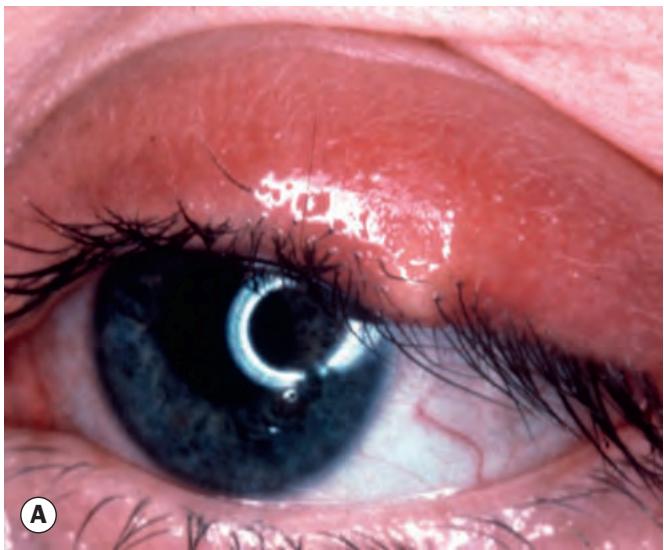
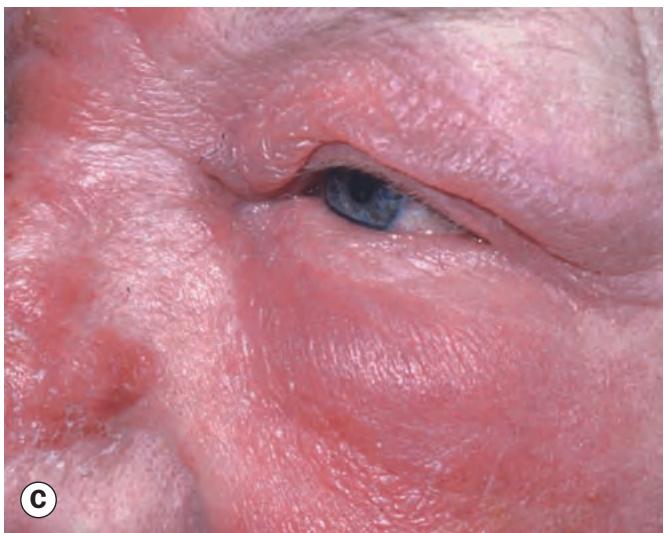
Fig. 1.38 Bacterial infections. (A) External hordeolum (stye); (B) impetigo; (C) erysipelas; (D) necrotizing fasciitis
Viral Infections