Treatment
Epilation with forceps is simple and effective but recurrence within a few weeks is essentially invariable. It can be used as a temporizing measure or in the occasional patient who refuses or cannot tolerate surgery.
Electrolysis or electrocautery (hyfrecation) are broadly similar electrosurgical techniques in which, under local anaesthesia, a fine wire is passed down the hair follicle to ablate the lash. It is generally useful for a limited number of lashes; scarring can occur. Frequently multiple treatments are required to obtain a satisfactory result.
Laser ablation is also useful for the treatment of limited aberrant eyelashes, and is performed using a spot size of 50 µm, duration of 0.1–0.2 s and power of 800–1000 mW. The base of the lash is targeted and shots are applied to create a crater that follows the axis of the follicle (Fig. 1.33). Success is broadly comparable to that achieved with electrosurgery.
Surgery
☐ Tarsal facture (transverse tarsotomy) is performed for marginal entropion. After placing a 4-0 traction suture, a horizontal incision is made through the tarsal plate via the conjunctiva, at least halfway down the plate, along the affected length of the lid and extended to 2–3 mm either side of the involved region. Depending on the extent of lid involvement, either two or three double-armed absorbable sutures are passed through the upper edge of the lower section of the tarsal plate to emerge just anterior to the lashes, leaving the lid margin very slightly everted (Fig. 1.34). The sutures are left in place following the surgery; occasionally short-term use of a bandage contact lens is required to prevent corneal abrading.
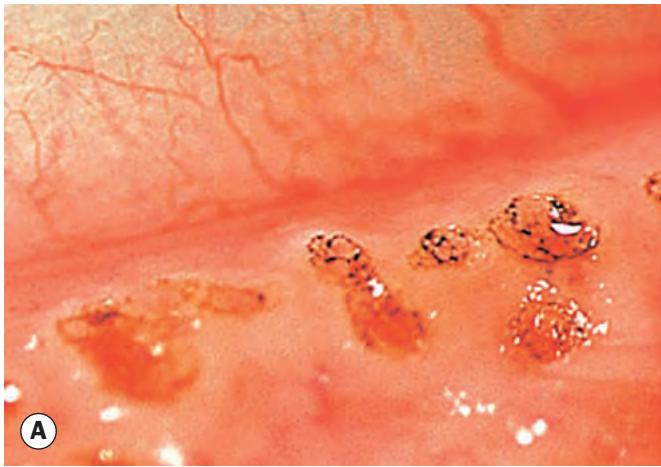
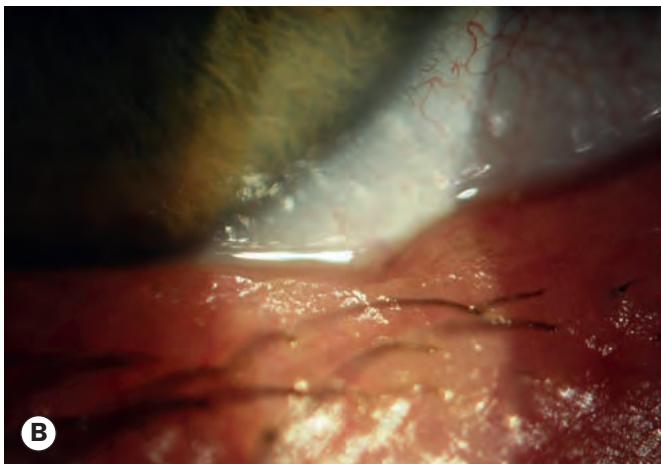
Fig. 1.33 Laser for trichiasis. (A) Appearance following ablation of multiple lashes; (B) the eye in Fig. 1.32B 6 weeks after laser ablation
○ A full-thickness eyelid pentagon resection can be used for a focal group of aberrant lashes, typically after trauma, or for localized marginal entropion.
○ Other options include lid splitting (see next) with follicle excision, and anterior lamellar rotation surgery.
Cryotherapy applied externally to the skin just inferior to the base of the abnormal lashes or – especially in distichiasis – to the internal aspect of the anterior lamella of the lid following splitting of the margin at the grey line (Fig. 1.35), can be used for numerous lashes. A double freeze–thaw cycle at −20 °C is applied under local anaesthesia (including adrenaline) with a plastic eye protector in place; suturing of the lid margin is not usually necessary following limited splitting. The method is effective but carries a high rate of local adverse effects, and is less commonly performed than previously.
Eyelash ptosis
Eyelash ptosis refers to a downward sagging of the upper lid lashes (Fig. 1.36A). The condition may be idiopathic or associated with floppy eyelid syndrome, dermatochalasis with anterior lamellar slip or long-standing facial palsy.
Trichomegaly
Trichomegaly is excessive eyelash growth (Fig. 1.36B); the main causes are listed in Table 1.1.
Madarosis
Madarosis is the term used for the loss of lashes (Fig. 1.36C). The main causes are shown in Table 1.2.
Poliosis
Poliosis is a premature localized whitening of hair, which may involve the lashes and eyebrows (Fig. 1.36D); the main causes are shown in Table 1.3.
Table 1.1 Causes of trichomegaly
| Drug-induced – topical prostaglandin analogues, phenytoin and ciclosporin |
| Malnutrition |
| AIDS |
| Porphyria |
| Hypothyroidism |
| Familial |
| Congenital: Oliver–McFarlane, Cornelia de Lange Goldstein–Hutt, Hermansky–Pudlak syndromes |
A
B
C
D
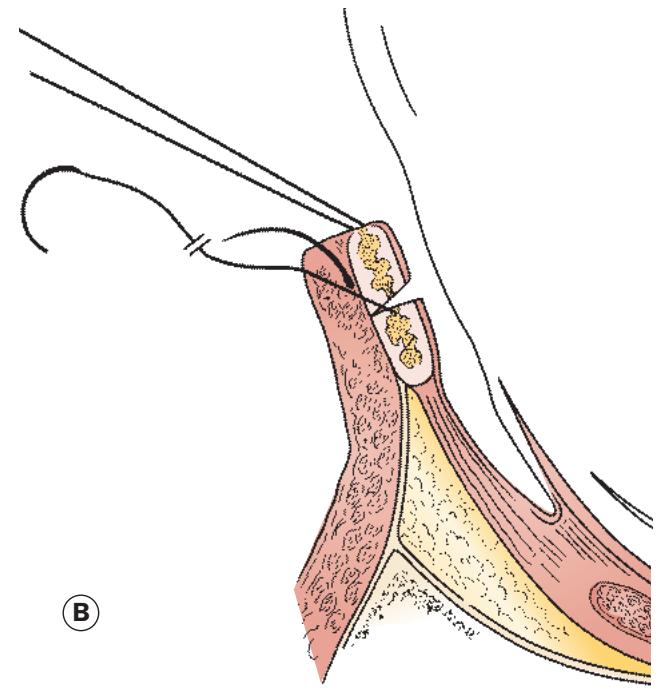
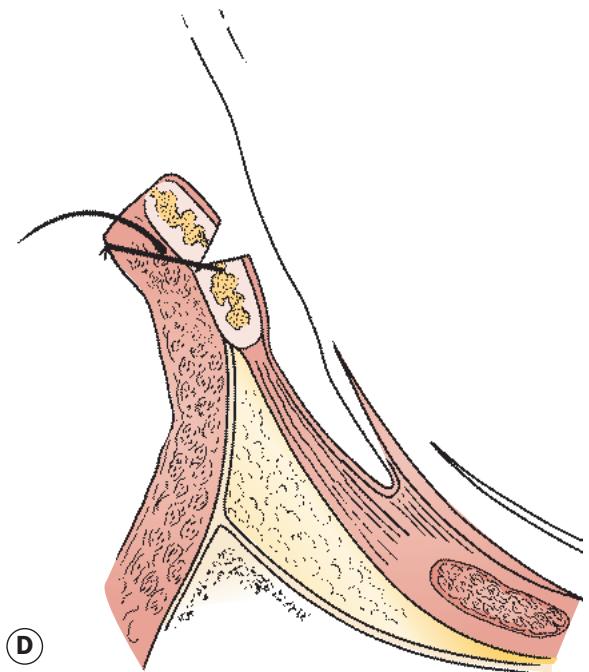
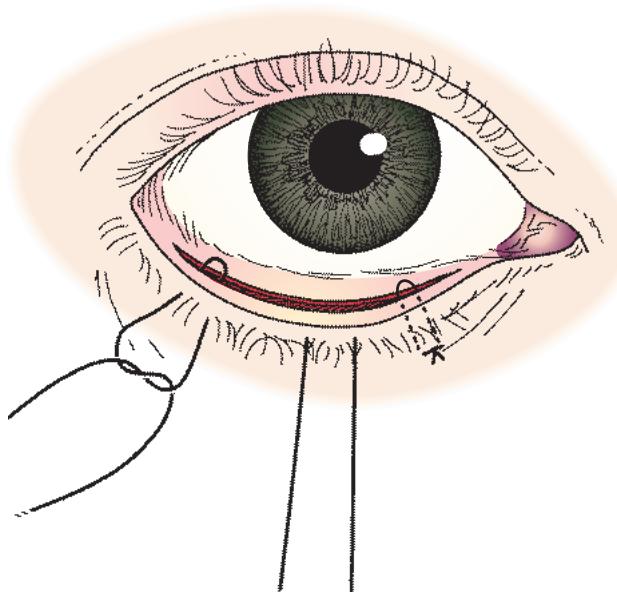

Fig. 1.34 Tarsal fracture for repair of marginal entropion. (A) and (B) insertion of everting sutures following traction suture emplacement and horizontal tarsal plate incision; (C) and (D) everting sutures in place (Courtesy of JA Nerad, from Techniques in Ophthalmic Plastic Surgery, Saunders 2010)