1.6 Bias
An estimate can be very precise but nevertheless inaccurate because of bias. Three main sources of bias exist: confounding, selection, and information bias.
1.6.1 Confounding
Confounding occurs when the association between exposure and outcome is influenced by a third variable that is related both to the exposure and the outcome (Fig. 1.2). A recent study found an association between cooking (as an occupation) and the incidence of ocular melanoma [13]. It could be argued that as many cooks work at night, it is possible that they could have relatively high exposure to sunlight due to daytime leisure activities compared to people working during the daytime. It is implied that the association between cooking and ocular melanoma could potentially (in part) be explained by a higher exposure to sunlight by cooks.
1.6.2 Selection Bias
Selection bias may occur when the chance of being included in the study population is not random for all members of the source population. For example, patients with an advanced tumor stage are more likely to be referred to a special cancer center than patients with a less advanced tumor stage. This form of selection bias is called referral bias. Selection bias could also be introduced in a study by choosing the wrong control group, especially if controls are selected from hospital patients.
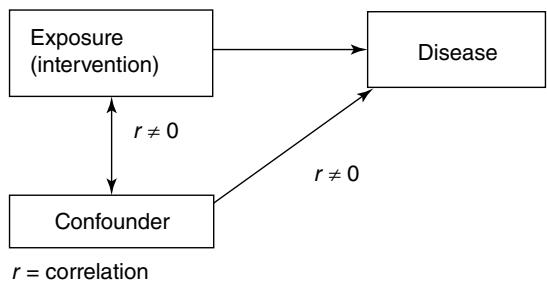
Fig. 1.2 Schematic representation of confounding
1.6.3 Information Bias
Information bias occurs when outcome or exposure variables are not accurately assessed. This is especially problematic when this occurs differently for exposed versus nonexposed cases or for cases versus controls. A well-known type of information bias is recall bias. This refers to the phenomenon that patients tend to remember more details about exposures that are possibly related to their disease than controls. For example, patients with uveal melanoma are probably more aware of the fact that their disease could be related to sunlight exposure. In turn, they reflect upon their own past exposure to sunlight in much more detail than healthy controls. This can lead to a relative underestimation of exposure in controls and, hence, an overestimation of the association with sunlight exposure.
1.7 Study Designs
There are several research designs, such as case series, cross-sectional, cohort, randomized control trial, and case-control study, that can be adopted in order to address a research question. Each of the study designs has its advantages and disadvantages (Table 1.3).
1.7.1 Case Series
In the case series, the authors present the clinical data regarding a group of patients (e.g. tumor response to chemotherapy combined with diode laser in retinoblastoma patients). The major disadvantage is that this kind of study does not have a comparative design and does not permit an answer to a question such as “There is a good response, but compared to what, as there is no control group.” [13].
1.7.2 Cross-Sectional Study
In a cross-sectional study, the outcome (and exposure) is assessed at one point in time. In prevalence studies, only the outcome is measured (e.g. prevalence of retinoblastoma in Denmark). In addition, the outcome between exposed and unexposed study participants can be compared in order to explore etiological questions. In a cross-sectional study on the association between iris color and posterior uveal melanoma, melanoma patients (N = 65) with light iris color were significantly more likely to have darker choroidal pigmentation than controls (N = 218) (p = 0.005). In addition, darker choroidal pigmentation was associated histologically with increased density of choroidal melanocytes (p = 0.005). The authors concluded that increased choroidal pigmentation, as a result of an increase in the density of pigmented choroidal melanocytes, is not protective but may actually be a risk factor for the development of posterior uveal melanoma in white patients [14].
The cross-sectional study design has the advantage that it is relatively easy to plan, that only one measurement is needed, and that it is inexpensive and quick to perform. From a methodological point of view, however, the design has some disadvantages. As both exposure and outcome are measured at the same time, we cannot be sure that the exposure preceded the outcome (the most important criterion for causality). Moreover, the outcome is always measured in terms of prevalent cases, and prevalent cases may have a relatively better prognosis (they are still alive) than the incident cases. Therefore, the associations found in a cross-sectional study can only rarely be interpreted as being causal.
Table 1.3 Advantages and disadvantages of different study designs
| Considerations | Type of study | ||||
| Methodological | Cross-sectional | Cohort | RCT | Case control | |
| Confounding | − | − | + | − | |
| Selection bias | − | ± | ± | − | |
| Information bias | ± | ± | ± | − | |
| Prior exposure | − | + | + | − | |
| Incident cases | − | + | + | + | |
| Practical | Length of study | + | − | ± | + |
| Organization | + | ± | − | ± | |
| Expenses | + | − | − | + | |
RCT randomized controlled trial
Negative score (−) indicates disadvantage compared to other study designs
Positive score (+) indicates advantage compared to other study designs
Equivocal score ( $ \pm $) indicates neither advantage nor disadvantage as compared to other study designs